Maria Montessori was one of the first female doctors in Italy during the 1800s. She started her career working for a clinic that served poor families. Several of the children had mental and physical disabilities, and after observation- Dr. Montessori decided that what the children truly needed was education. In 1907, Dr. Montessori was able to open the first ‘House of Children’ and test all of her methods on children living in the slums of Rome. She continued traveling the world and furthering her own education until she died in 1952.
Now- teachers all over learn of Dr. Montessori and her methods during their college courses. If you haven’t read them already, I highly recommend The Montessori Baby and The Montessori Toddler by Simone Davies.
There are a few key characteristics or principles of Montessori education:
Environment- Following a Montessori approach, the environment is prepared with care and attention. All of the tools, materials, and spaces should be set up in such a way that each child can independently access what they need. A lot of the Montessori materials are natural and beautiful as they are.
Intrinsically Motivating- Dr. Montessori believed that children were naturally curious, and when the environment was prepared appropriately, would willing engage.
Freedom & Limits- Following a Montessori approach, children have the freedom to choose what occupies their time so long as they are respectful to others and their environment.
Independence & Responsibility- Children who participate in Montessori are given more independence. It is through that independence that children learn responsibility.
I don’t remember what prompted me to begin diving into Montessori methods, but we started living a “Montessori-is” lifestyle in the spring of 2020. Preparing our home environment and focusing on daily life activities were the first changes we made to our lives.
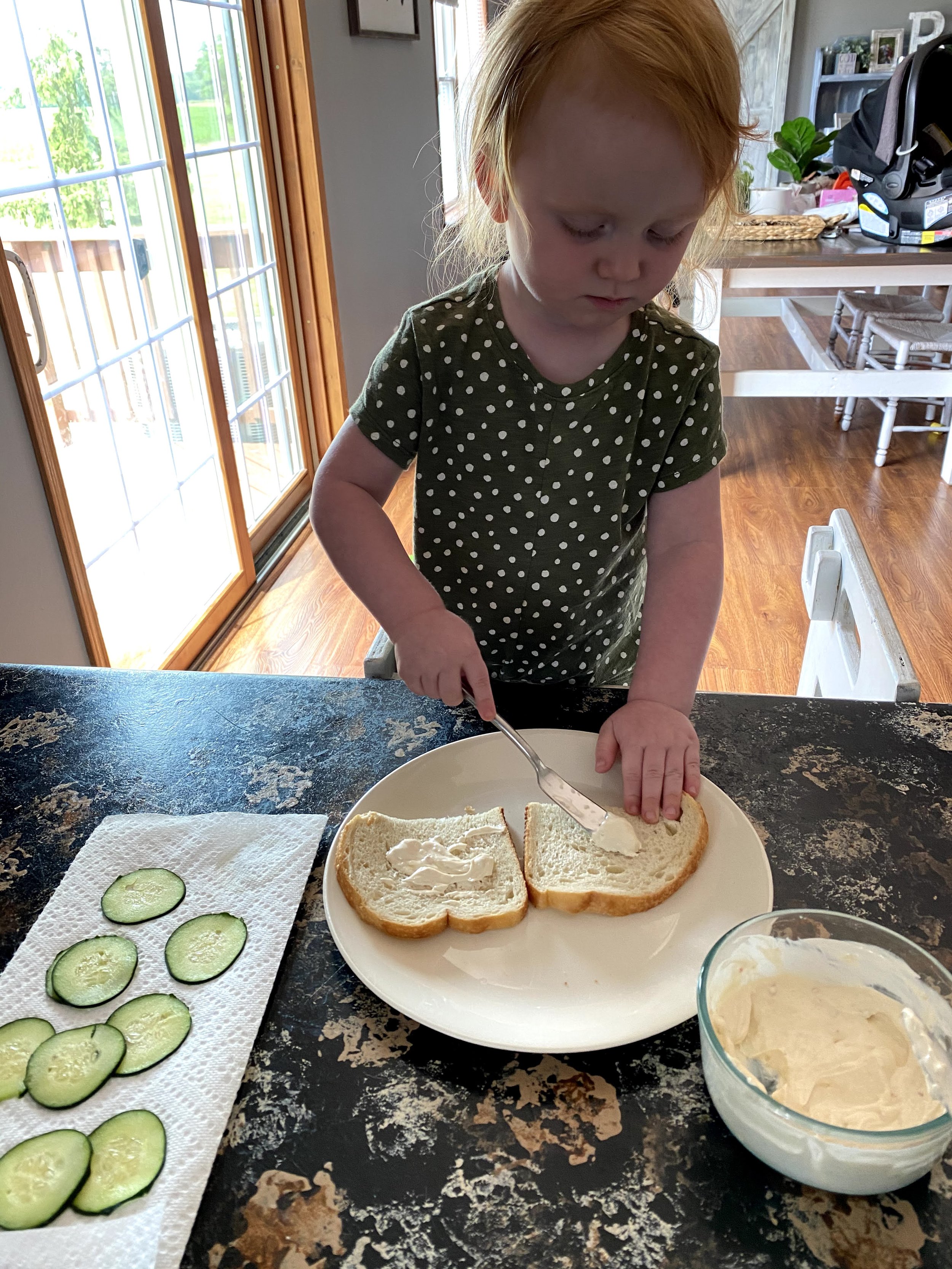
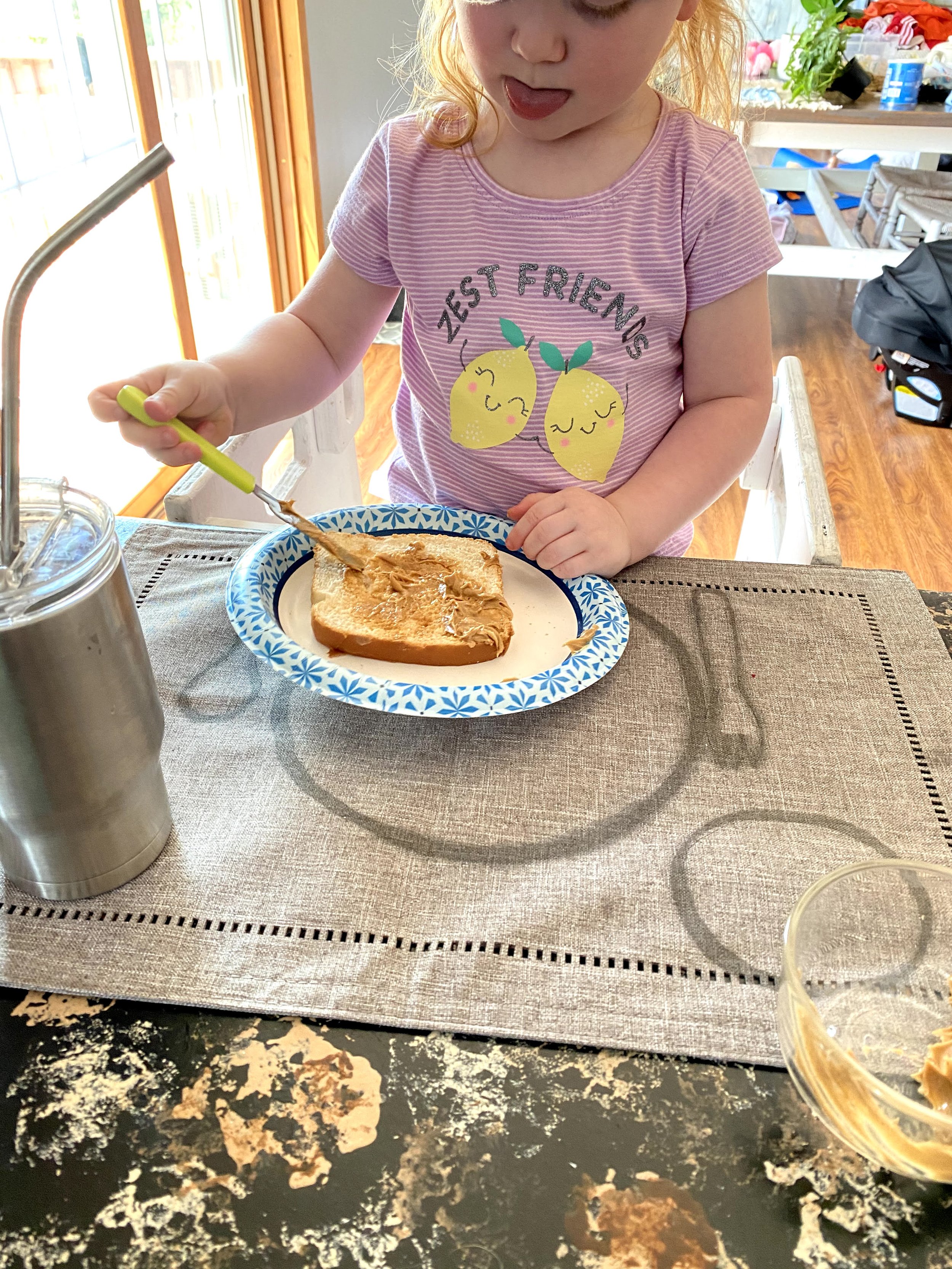
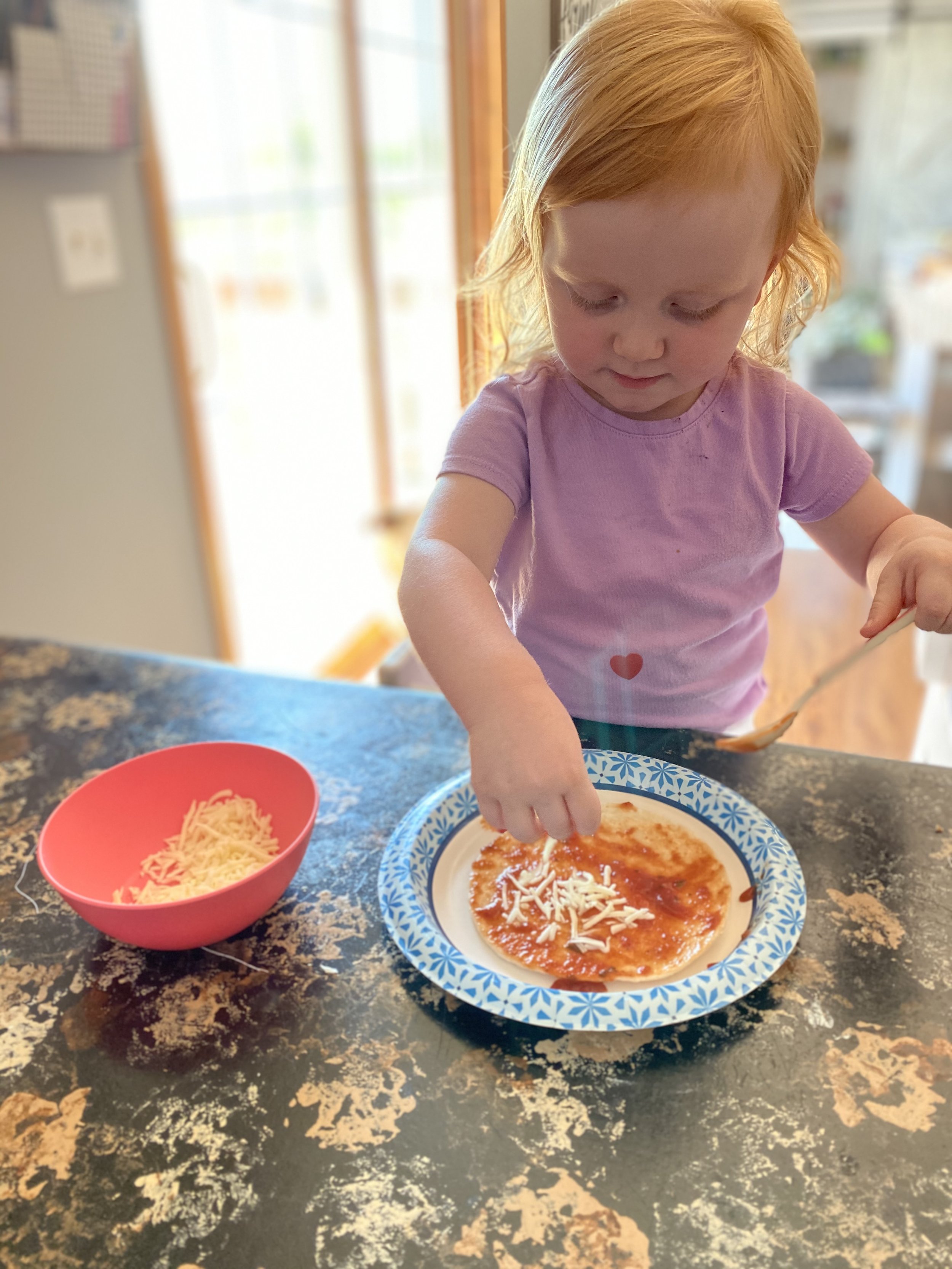
My husband and father-in-law built a wooden kitchen helper to make it easier for our older daughter to access the counter as a workspace. I had seen a beautiful Montessori place mat on Etsy for a ridiculous amount of money, so my mother traced dishes & utensils onto a placemat to use instead. With these two small changes, our oldest was able to set her place at the table/counter and begin participating in preparing food.
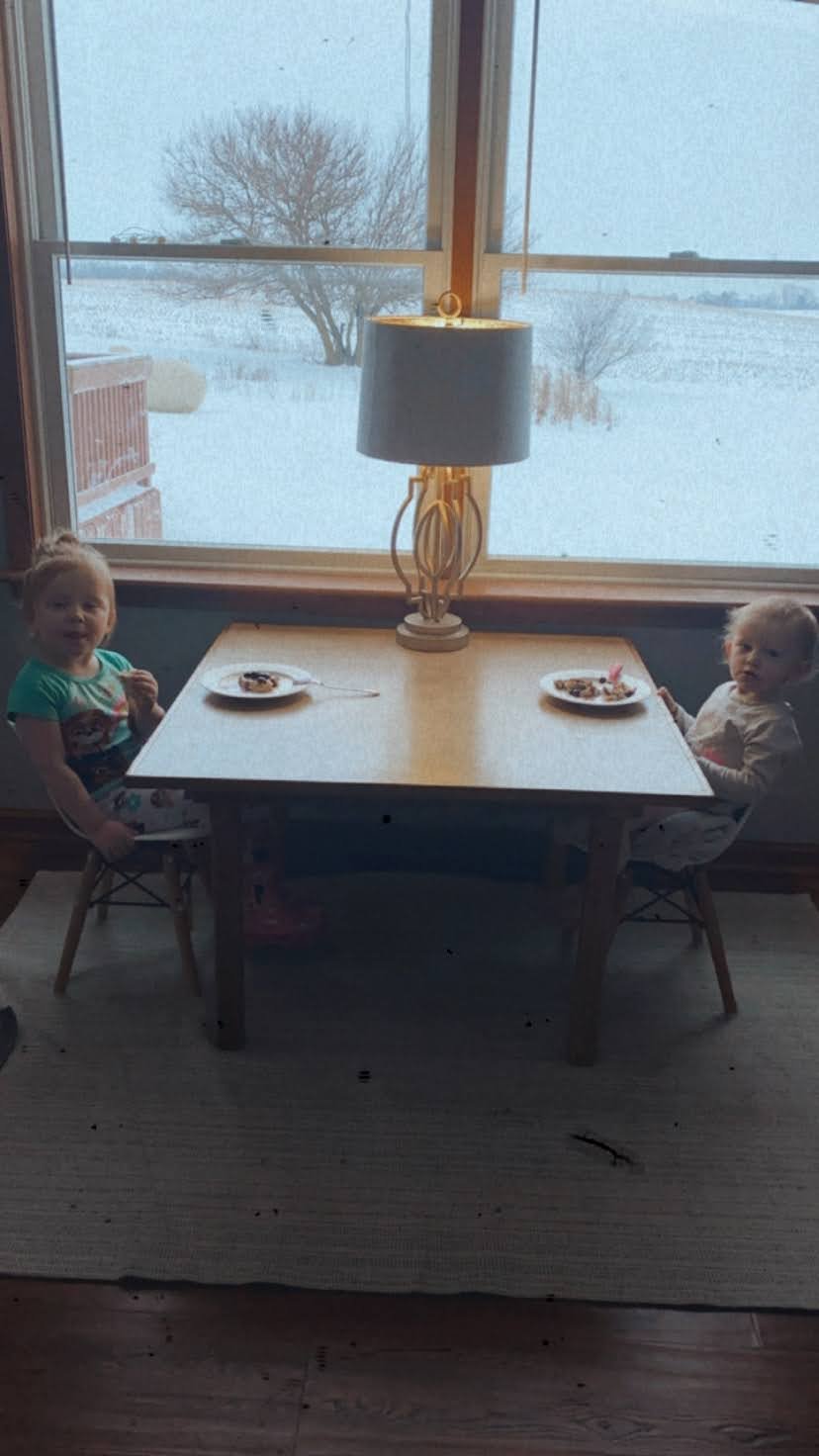
Now we have two kitchen helpers for our two older girls and an IKEA kitchen for children. The kitchen holds all of the girls’ dishes, silverware, and cloth placemats & napkins. Because they are able to access those items, they are responsible for getting out their dishes & utensils, as well as setting their places at the table. Not only do these activities support the girls’ independence and responsibility, it creates a meal time routine that the girls have come to anticipate. When mealtime is over, the girls know to scrape any leftover bites into the trash and place their plates into the sink.