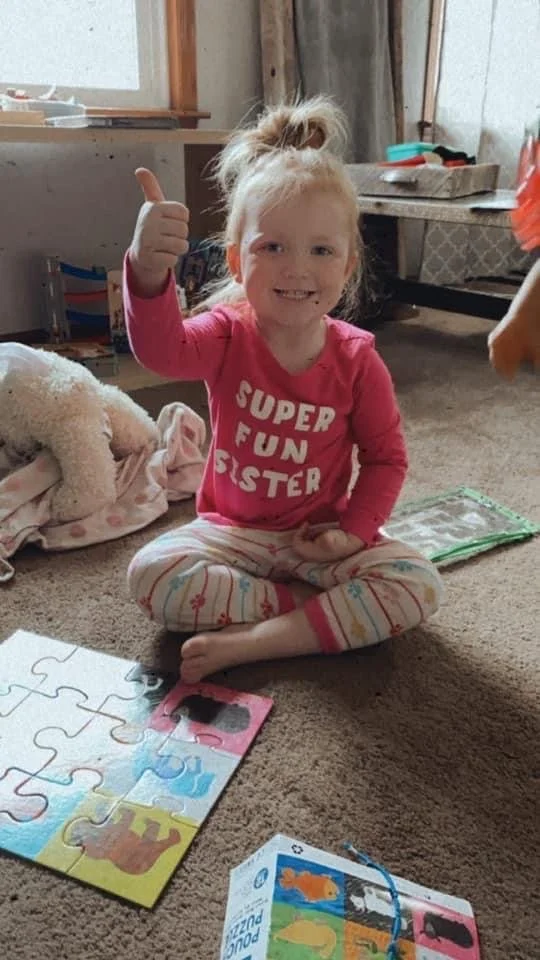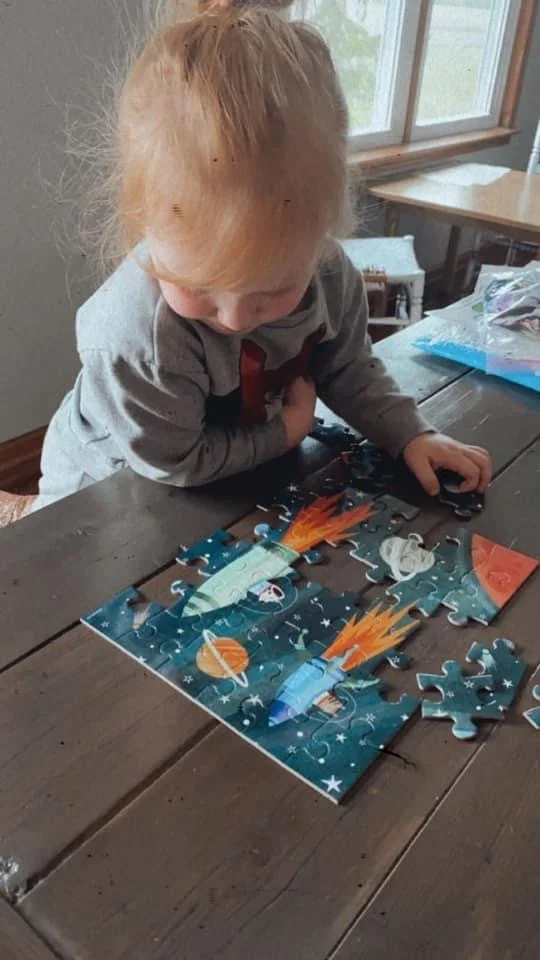
Our autistic daughter, Ellis, is turning 3 three in November and has recently become interested in puzzles. She has a relatively low frustration level and becomes easily discouraged, which leads to her avoiding tasks that require more work from her. Starting with more basic puzzles have helped build her confidence and slowly easing our way into more difficult puzzles is a great way to challenge her.
Although she is not working on puzzles that “match” her age- that is okay! Instead of feeling discouraged that Ellis is not able to complete puzzles that her typical peers might be working on, I feel empowered that I know the progression and how to intervene in the meantime. Being knowledgable about child development can help you make a shift in how you think about your child.
Working on puzzles builds many different skills in babies and toddlers. When completing puzzles, little brains are building:
Fine Motor Skills
Spatial Awareness
Shape Recognition
Hand-eye Coordination
Memory
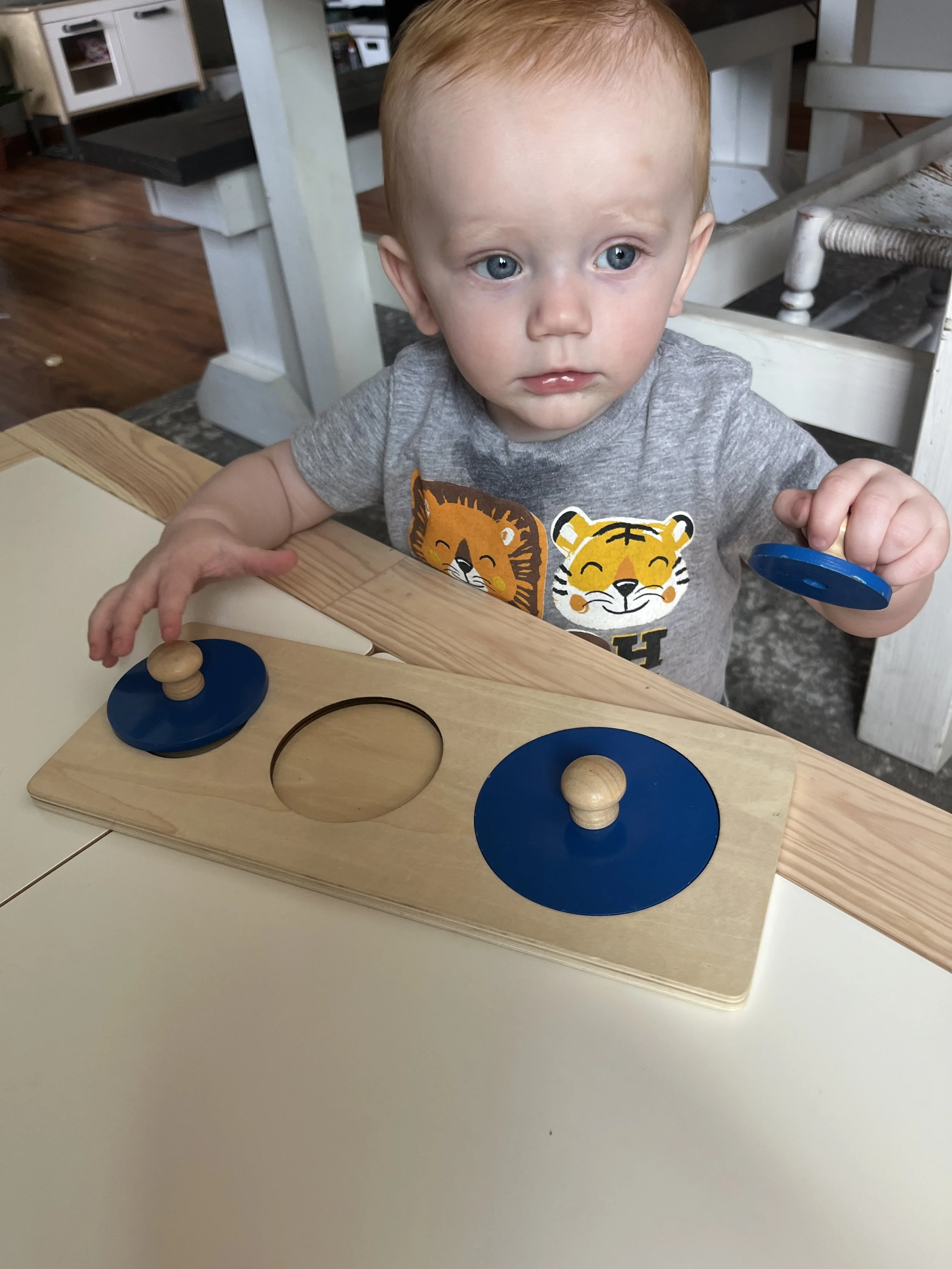
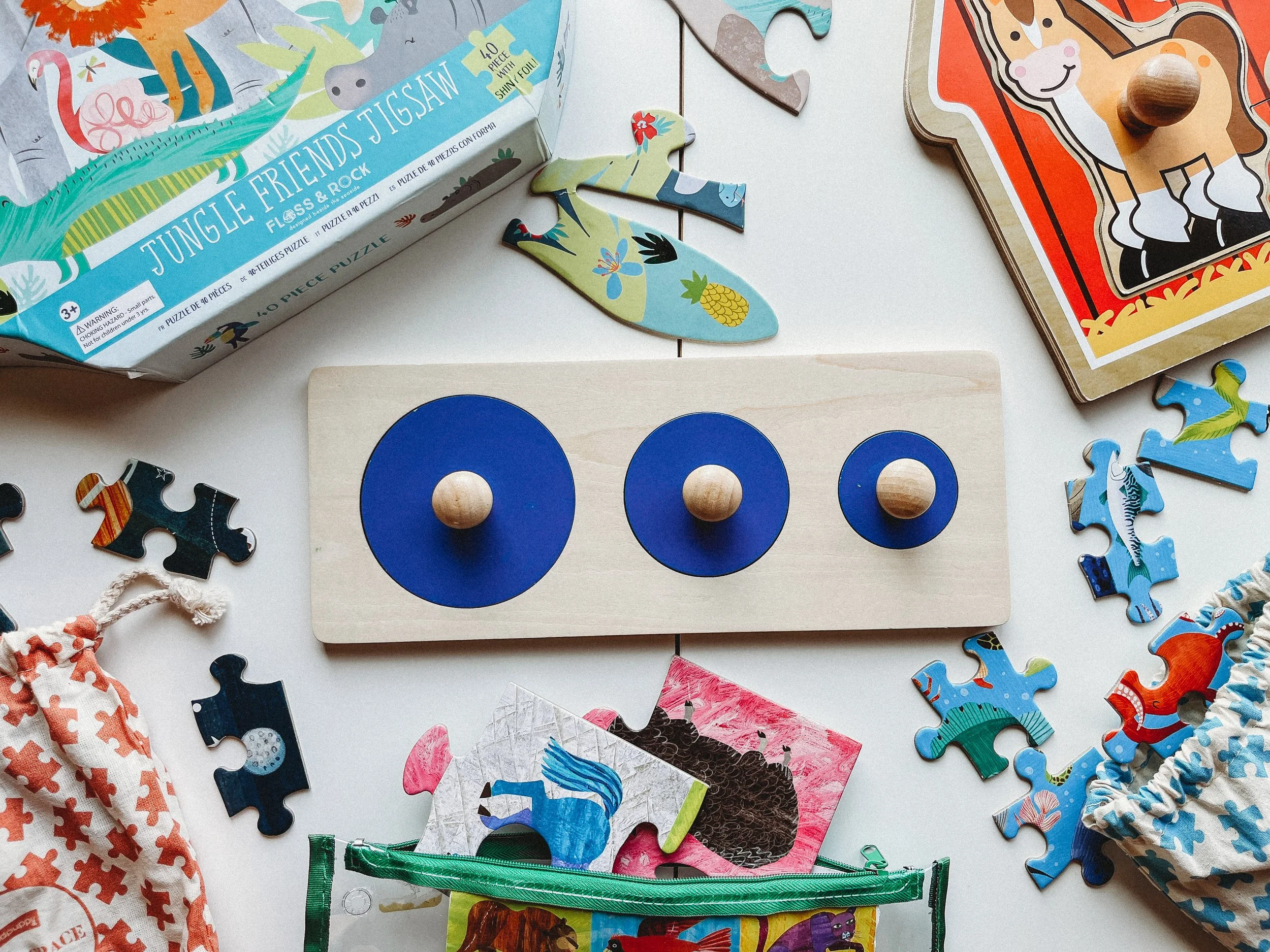
Knob & Peg Puzzles: Knob and peg puzzles are typically introduced around 6 months of age and encourage baby to progress from raking grasp to pincher grasp.
Within knob & peg puzzles there is also a progression starting with a single piece knob puzzle, moving onto a multi-piece puzzles, and ending with varying shapes.
Jigsaw Puzzles: Jigsaw puzzles are typically introduced after children have mastered knob & peg puzzles, sometime around two years old.
Just like with knob & peg puzzles, there is a progression within jigsaw puzzles. Jigsaw puzzles can start with 2-3 pieces, moving on to 4-6 pieces and 12-16 pieces, then 24-36 pieces+.