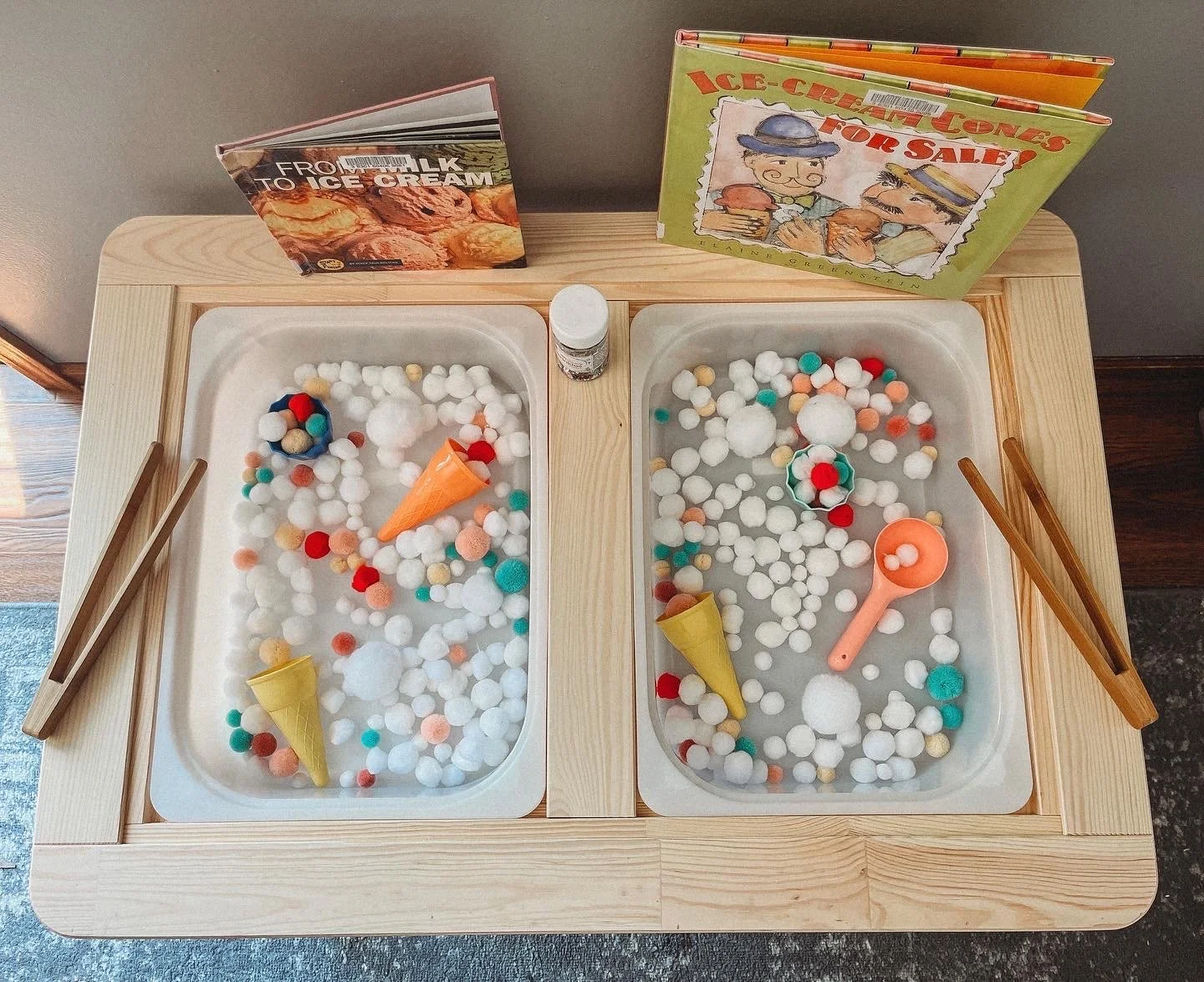
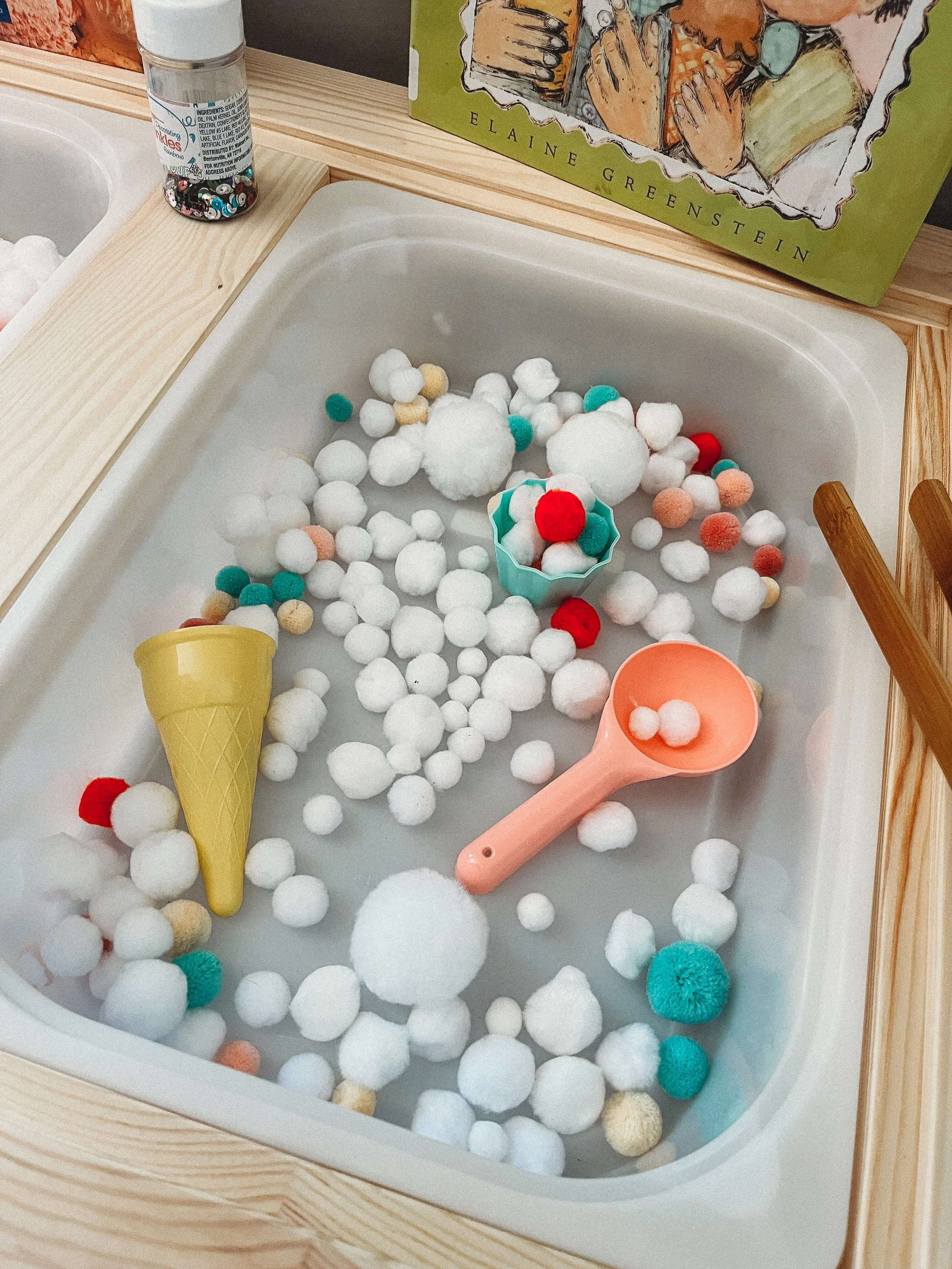
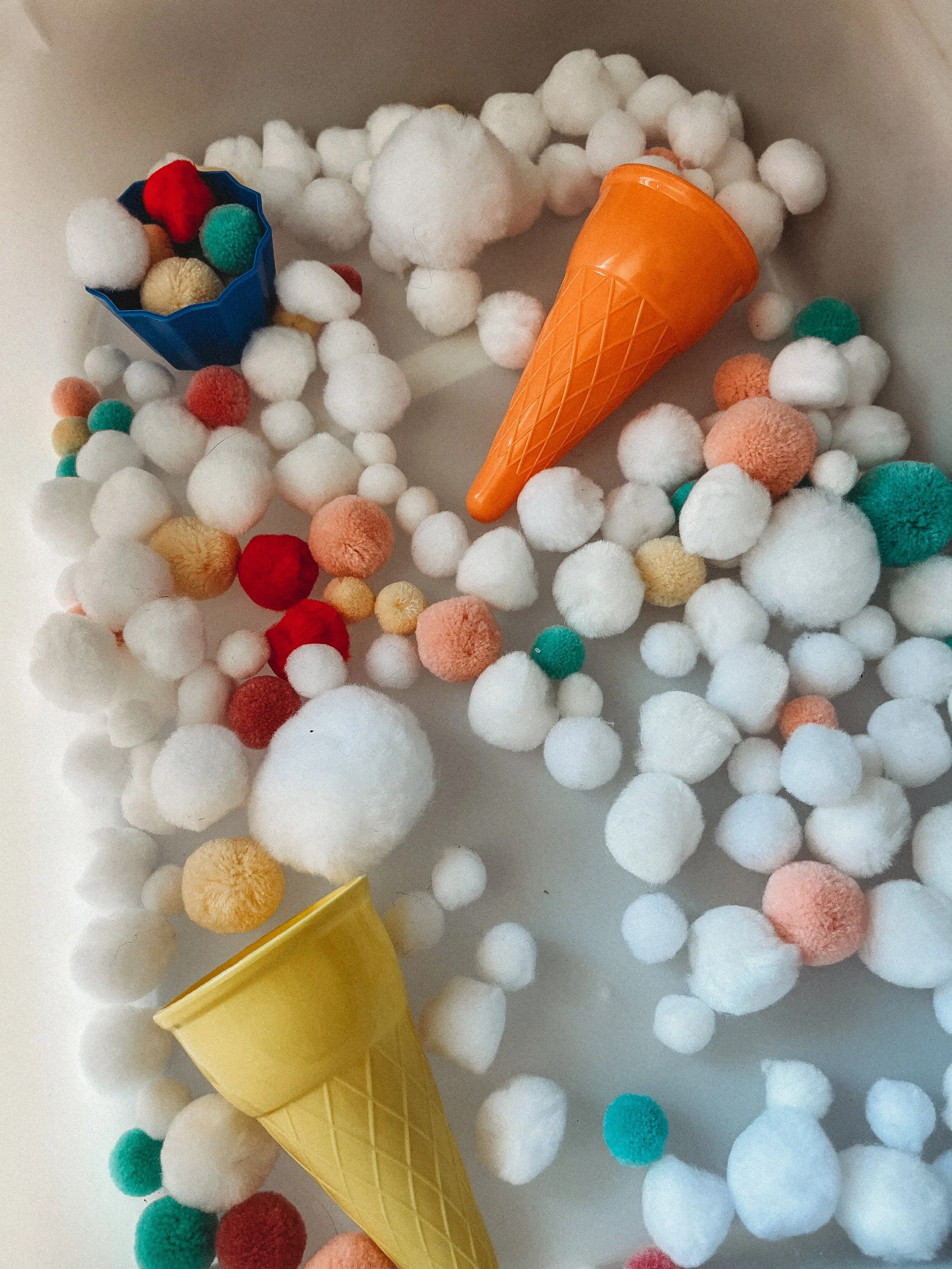
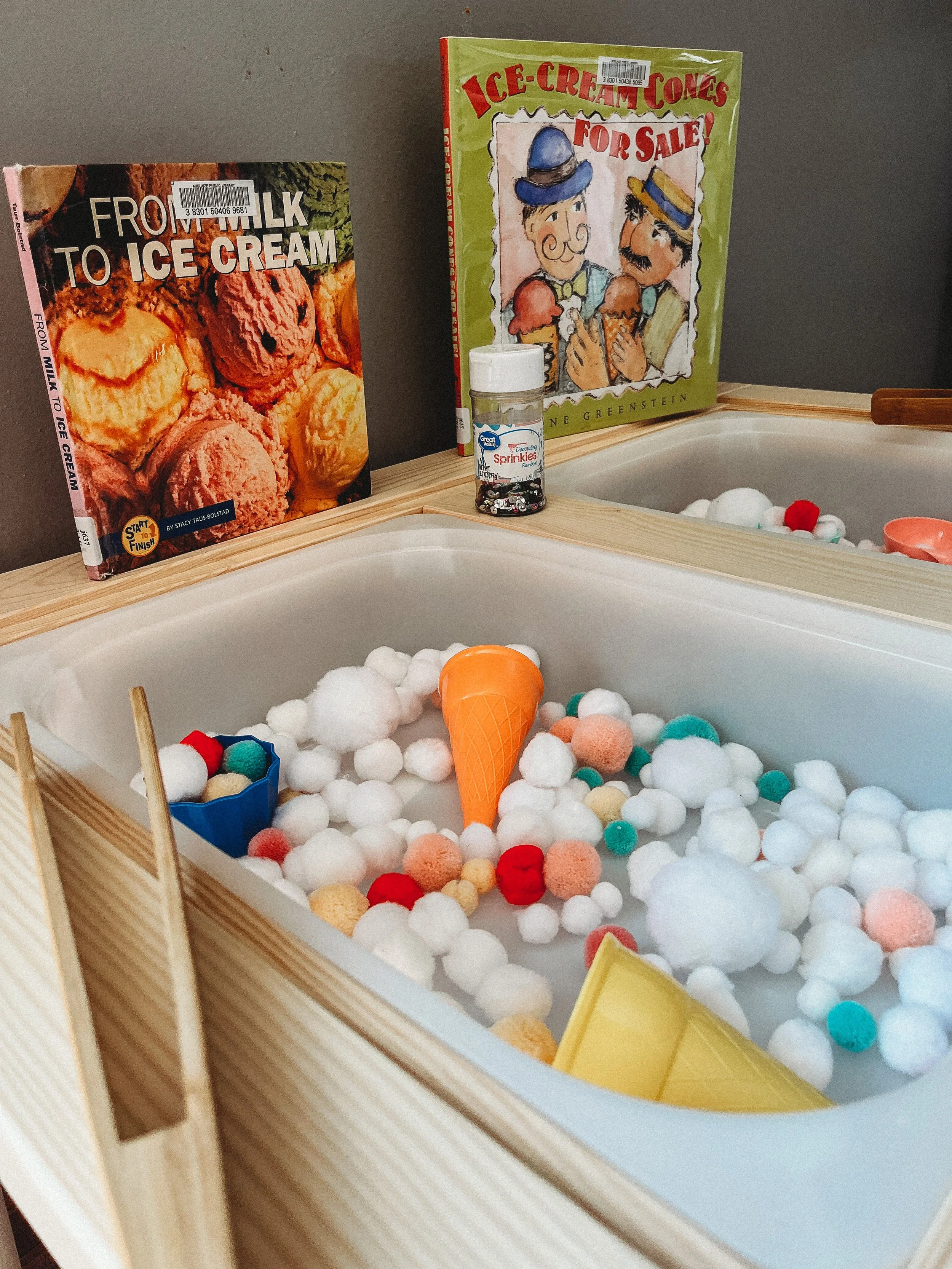
Sensory play is play that stimulates your child’s senses and encourages them to explore the world around them. Some of these activities could include jumping on a trampoline, dancing to music, or playing with slime.
Sensory play involves much more than the five senses touch, taste, sight, smell, and sound though. There are two more, less commonly known sensory systems; the vestibular and proprioceptive systems.
The vestibular system is located within the inner ear and helps control a person’s sense of motion. The proprioceptive system is located within the receptors in a person’s skin, joints, and muscles and makes a person aware of where their body is in space.
As your child experiences new sensory input, new nerve connections are being built in their growing brain leading to cognitive development. Over time, these experiences can encourage the development of different developmental skills such as language skills, motor skills, social skills, and problem solving skills. Providing a variety of opportunities for sensory input allows your children to build their sensory threshold, meaning their nervous system will be able to properly take in sensory information.
Although I love a good sensory bin, there are so many more types of sensory play!
Tactile Play- Tactile play is play that involves touch. Exploring the different textures in a sensory bin, feeling the vibrations of a toy, manipulating PlayDoh.
Vestibular Play- Vestibular play is play that involves balance. Jumping, swinging, rolling around.
Proprioceptive Play- Proprioceptive play is play that involves spatial awareness. Pushing, pulling, jumping.
Auditory Play- Auditory play is play that involves sound. Creating sounds with different musical instruments or clashing pots and pans.
Smell & Taste- Most of the time, these types of play do not need to be explicitly planned for. Naturally, your child will put a toy in their mouth to taste it or stop to smell flowers outside.
How does your family incorporate sensory play?